 Voyaggora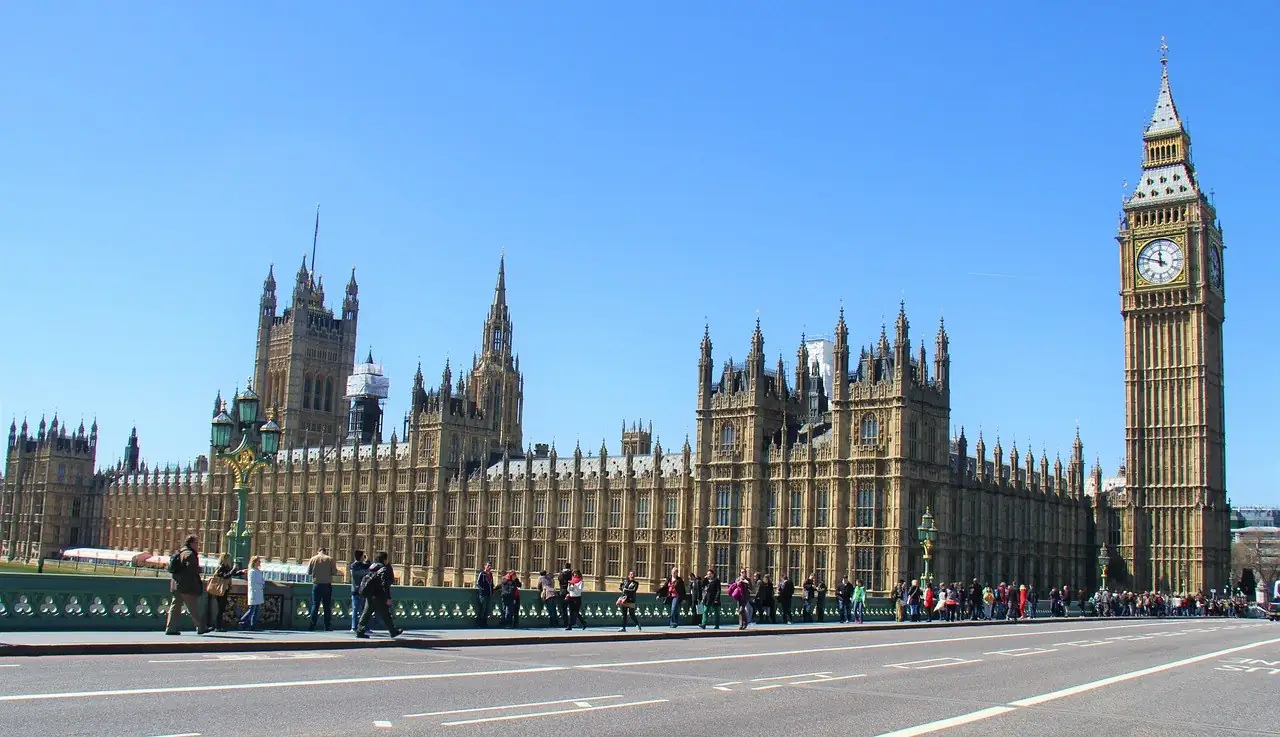
Top sights in London
- Tower of London – Castle in central London, United Kingdom
- Westminster Abbey – Gothic abbey church in London, England, UK
- Big Ben – Tower of the Palace of Westminster, London containing the bell Big Ben
- Buckingham Palace – Official London residence and principal workplace of the British monarch
- British Museum – National museum in London, United Kingdom
- London Eye – Observation wheel in London, England
- Tower Bridge – Bascule and suspension bridge in London
- St Paul's Cathedral – Cathedral in the City of London, England, UK
Well-known landmarks, each checked against Wikidata (CC0), which also supplies the one-line descriptions. The bookable tours below are the second layer: guided ways to see them.
Top-rated tours in London
Planning your trip to London
Best time to visit
Late spring (May–June) and early autumn (September) bring the best odds of mild, dry weather. Summer is busiest and priciest for hotels; winter is quieter with lower prices but short daylight and frequent rain.
How many days you need
Four to five days covers the main museums, a West End show and a couple of neighborhoods. London rewards a slower pace more than a checklist of sights.
Getting around
The Underground (Tube) reaches almost everywhere and is the fastest option; buses are slower but scenic and cheaper. Central London is very walkable between nearby attractions — Trafalgar Square to Covent Garden, for instance.
What to skip
Restaurants directly on the main tourist strips (right by Leicester Square or Oxford Street) are rarely where Londoners eat; a short walk into a side street usually finds better value.
Where to stay in London
Hotels and vacation rentals around London with live prices from the big booking sites. Pick your dates on the map to compare.
Hotel map by our partner Stay22. If you book through it we may earn a commission, at no extra cost to you.
Best time to visit London
The most comfortable months in London are May to June and September, with average daytime highs of 63 to 70°F (17 to 21°C) and 11 to 11 rainy days a month. July is the hottest month, averaging 73°F (23°C), and January the coolest at 46°F (8°C). October sees the most rain, around 16 days, while August is the driest with about 8.
Jump to a month: Jan Feb Mar Apr May Jun Jul Aug Sep Oct Nov Dec
| Month | Avg high | Avg low | Rain (about, mm) | Rainy days | Verdict |
|---|---|---|---|---|---|
| January | 46°F (8°C) | 35°F (2°C) | 60 | 11 | Shoulder: 46°F (8°C), 11 rainy days |
| February | 50°F (10°C) | 38°F (3°C) | 50 | 12 | Shoulder: 50°F (10°C), 12 rainy days |
| March | 53°F (12°C) | 39°F (4°C) | 50 | 14 | Shoulder: 53°F (12°C), 14 rainy days |
| April | 57°F (14°C) | 40°F (4°C) | 40 | 9 | Shoulder: 57°F (14°C), 9 rainy days |
| May | 63°F (17°C) | 47°F (8°C) | 60 | 11 | Best: 11 rainy days |
| June | 70°F (21°C) | 53°F (12°C) | 60 | 11 | Best: 11 rainy days |
| July | 73°F (23°C) | 57°F (14°C) | 60 | 11 | Shoulder: 73°F (23°C), 11 rainy days |
| August | 73°F (23°C) | 57°F (14°C) | 70 | 8 | Shoulder: 73°F (23°C), 8 rainy days |
| September | 69°F (21°C) | 53°F (12°C) | 40 | 11 | Best: 11 rainy days |
| October | 60°F (16°C) | 48°F (9°C) | 70 | 16 | Avoid: among the wettest, 16 rainy days |
| November | 52°F (11°C) | 42°F (6°C) | 70 | 12 | Shoulder: 52°F (11°C), 12 rainy days |
| December | 48°F (9°C) | 39°F (4°C) | 70 | 13 | Shoulder: 48°F (9°C), 13 rainy days |
Average daily high and low, and days with rain (a day with at least 1 mm), from Open-Meteo ERA5 records for 2019-2024. Highlighted rows are the pick above. Verdicts use only these numbers.
Rainfall: NASA POWER monthly normals.
Plan the rest of your trip to London

More destinations in Europe
Closest guides to London
Planning guides
Right now in London
Is it safe to travel to United Kingdom right now?
Official US, UK and Canada travel advice for United Kingdom, side by side, with each source and the time it was checked. See today's advisory for United Kingdom
London: common questions
- When is the best time to visit London?
- The best time to visit London is May to June and September, when average highs run 63 to 70°F (17 to 21°C) with 11 to 11 rainy days a month. July is the hottest month at 73°F (23°C) on average, and January the coolest at 46°F (8°C).
- What is the rainiest month in London?
- October, with roughly 16 days of rain. The driest is August, with about 8. A rainy day is a day with at least 1 mm of rain; figures are averages from 2019-2024 records.
- How warm does it get in London?
- July is the warmest month, averaging 73°F (23°C) by day and 57°F (14°C) at night. January is the coolest, at 46°F (8°C) by day and 35°F (2°C) at night.
- What is the rainy season in London?
- The wettest months in London are February to March and October to December, with 12 to 16 rainy days a month. August is the driest.
- How many days do you need in London?
- Four to five days covers the main museums, a West End show and a couple of neighborhoods. London rewards a slower pace more than a checklist of sights.
- How do I get around London?
- The Underground (Tube) reaches almost everywhere and is the fastest option; buses are slower but scenic and cheaper. Central London is very walkable between nearby attractions — Trafalgar Square to Covent Garden, for instance.
- Is it safe to travel to United Kingdom right now?
- Voyaggora shows the official US, UK and Canada travel advisories for United Kingdom on one page, with the source and the time each was last checked. Open the live advisory for United Kingdom before you book.
- What other places are near London?
- The closest Voyaggora guides to London are Bruges (150 miles), Brussels (200 miles), Paris (210 miles).
Some links on this page are sponsored: if you book through them we may earn a commission at no extra cost to you. Ratings and review counts come from GetYourGuide and were last checked on September 28, 2026. Prices, availability and rules are set by the providers and change often. See our affiliate disclosure.